| Primary Interaction Status | — |
| Allelopathic Compatibility Index ACI | — |
| Spatial Synergy Matching Coefficient | — |
| Biodiversity Prototyping Rating Score | — |
| Estimated Biochemical Toxic Stress | — |
| Root System Interlocking Depth Ratio | — |
| Entomological Pest Repelling Level | — |
| Recommended Micro-Climate Separation | — |
| Comprehensive Polyculture Index | — |
Modern agricultural practices and domestic horticulture are undergoing a massive and necessary paradigm shift. For decades, the dominant strategy relied heavily on sterile monocultures—vast fields entirely dedicated to a single species. While logistically simple for heavy machinery, this approach strips the soil of specific targeted nutrients, creates a highly vulnerable biological target for specialized insect pests, and requires immense inputs of synthetic fertilizers to maintain viability. The ecological alternative lies in observing and replicating natural wild ecosystems, where immense biodiversity naturally creates a self-regulating, resilient, and highly productive environment. This regenerative methodology relies entirely on a profound understanding of how different botanical species interact, communicate, and either support or actively sabotage one another in the field.
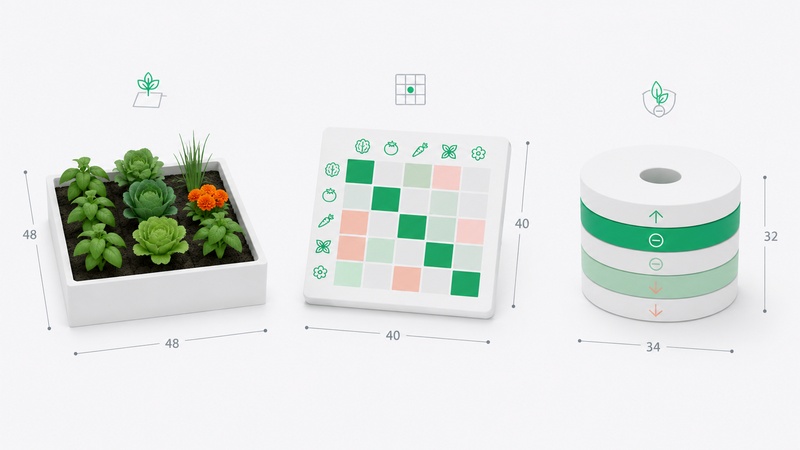
At the absolute core of this complex biological web is the concept of plant sociology. Much like human communities, plant ecosystems feature individuals that collaborate flawlessly, neighbors who merely tolerate each other without conflict, and highly aggressive antagonists who wage invisible chemical warfare to secure precious territory and resources. Mapping these intricate relationships requires a highly structured, data-driven approach, which is exactly the purpose of a Companion Planting Compatibility Matrix and Allelopathic Interaction Grid. This dynamic system moves completely beyond ancient garden folklore, rooting your agricultural planning strictly in peer-reviewed botany, biochemistry, and advanced agronomy.
Table of Contents
The Science of Botanical Communication and Invisible Synergies
To fully harness the power of a botanical interaction grid, one must first comprehend the invisible biochemical mechanisms operating continuously below the soil line and in the air above the canopy. Plants are fundamentally stationary organisms. They cannot physically run away from invading predators, nor can they uproot themselves and migrate to a richer valley if they deplete their local mineral reserves. Because they are anchored in place, they have evolved unbelievably sophisticated biochemical defense and communication networks. They constantly manufacture thousands of secondary metabolites, which are specialized organic compounds not directly involved in basic photosynthesis or physical growth, but absolutely critical for ecological interaction and localized survival.
These biochemical relationships are broadly categorized into two main opposing forces: beneficial synergism and antagonistic allelopathy. Synergism occurs when two entirely different plant species seamlessly occupy complementary ecological niches or actively modify the local microclimate to improve the environment for one another. For example, a tall, sturdy plant might provide crucial afternoon shade for a delicate, heat-sensitive companion. Below ground, a species featuring a massive, deep-diving taproot might mine raw calcium and potassium from the dense subsoil, bringing those heavy minerals up to the surface foliage. When those leaves eventually drop and decompose, those precious minerals become readily available to shallow-rooted companion plants that otherwise would have starved.
❖ Furthermore, many highly aromatic plants release complex volatile organic compounds directly from their foliage. These intensely scented airborne chemicals serve as an invisible shield, masking the subtle odors of vulnerable food crops and effectively blinding the olfactory sensors of parasitic insects searching for a host. This cooperative biological cloaking is a fundamental pillar of natural pest management and a primary reason why certain pairings score extremely high synergy ratings within our interaction matrix.
Allelopathy: The Hidden Chemical Wars Beneath the Soil
Conversely, allelopathy represents pure botanical chemical warfare. This fascinating but destructive phenomenon occurs when a specific plant actively releases potent biochemical inhibitors into the surrounding environment to violently suppress the germination, growth, and overall survival of competing species. In the brutal fight for limited water, sunlight, and soil nitrogen, some plants simply eliminate the competition rather than trying to outgrow it.
These aggressive allelochemicals are deployed through several distinct pathways. They can be exuded directly as liquid from living roots pushing through the rhizosphere. They can be volatilized into the air as toxic gases from the leaves, descending upon neighboring vegetation like an invisible fog. They can be leached directly from the foliage by heavy rain, washing toxic compounds straight into the root zones of adjacent plants. Finally, they can be released slowly into the topsoil as fallen leaves, stems, and seed casings physically decompose over the winter season.
Recognizing these allelopathic aggressors is the single most critical function of any compatibility grid. Placing a highly susceptible vegetable crop next to an allelopathic powerhouse will inevitably result in severely stunted growth, rapid leaf chlorosis, failure to set fruit, and ultimate crop death, regardless of how meticulously you water, prune, or fertilize the plot. Understanding these negative interaction scores prevents catastrophic agricultural failures before the first seed is even planted.
Mathematical Modeling of Polyculture Efficiency
While enthusiastic backyard gardeners often rely entirely on visual observation to judge success, professional ecological agronomists and landscape researchers utilize strict mathematical formulas to quantify the precise efficiency of companion planting setups. These crucial metrics prove objectively whether a specific multi-species combination identified in the matrix is actually biologically and economically viable on a large scale.
The Land Equivalent Ratio
The absolute most fundamental calculation in polyculture evaluation is the Land Equivalent Ratio, universally abbreviated in agricultural science as LER. This brilliant metric determines the exact relative land area required when using solitary monocrops to produce the exact same total yield achieved by an intercropped botanical system.
LER = Yp1 / Ym1 + Yp2 / Ym2
In this essential equation, Yp1 represents the total harvested yield of the very first crop species grown inside the mixed polyculture system. The variable Ym1 represents the baseline yield of that exact same species grown in a standard, isolated monoculture environment of the same size. The second half of the equation applies the exact same logic to the second crop using the subscript 2.
Let us examine a highly practical field example involving sweet corn and climbing pole beans. Suppose an agricultural researcher harvests a baseline of 4000 kilograms of corn per hectare in a pure, isolated monoculture, and separately harvests 2000 kilograms of beans per hectare in an isolated monoculture. When these two species are grown intentionally intertwined using targeted companion planting techniques on a single hectare, the combined intercrop yields 3200 kilograms of corn alongside 1200 kilograms of beans.
The first step requires calculating the partial efficiency for the corn crop alone: 3200 divided by the baseline 4000 gives a value of 0.8. The second step calculates the partial efficiency for the climbing beans: 1200 divided by the baseline 2000 gives a value of 0.6. By adding these two figures together, the researcher arrives at a final total Land Equivalent Ratio of 1.4.
◈ An LER of 1.4 mathematically proves that a farmer would need exactly 40 % more total land area if they continued planting separated monocultures to achieve the same combined harvest produced by the intercropped system. Any final LER significantly greater than 1.0 objectively proves that the specific botanical pairing is highly synergistic and represents a vastly superior use of available soil, water, and sunlight.
The Allelopathic Inhibition Index
Another vitally important tool for verifying matrix data is the Allelopathic Inhibition Index, commonly abbreviated as AII. This specific laboratory formula measures the exact suppressive power of one plant over another, and is primarily utilized by scientists when formally testing concentrated root exudates or fermented leaf litter extracts in highly controlled environments.
AII = Cc – Ct / Cc * 100
Within this specific framework, Cc represents the baseline growth metric of the isolated control group. An example would be the average root length of a germinating tomato seedling grown in pure, uncontaminated distilled water. Ct represents the exact same growth metric of the test group, meaning the seedling grown in a water solution containing a specific concentration of the suspected allelopathic botanical extract.
Imagine a laboratory rigorously testing the allelopathic strength of a black walnut leaf extract directly on sensitive agricultural weed seeds. The uncontaminated control seeds successfully develop an average root length of 50 millimeters. Conversely, the seeds exposed to the dark walnut extract only manage to push out a stunted root length of 15 millimeters. The primary calculation is 50 minus 15, yielding 35. Dividing that 35 by the original control length of 50 yields a decimal of 0.7. Finally, multiplying by 100 gives an official Allelopathic Inhibition Index of 70 %. This massive number confirms an extremely severe negative biological interaction, earning an immediate red warning marker on any reputable compatibility grid.
The Relative Crowding Coefficient
To further understand competitive dominance within a shared space, scientists use the Relative Crowding Coefficient, denoted by the letter K. This formula measures which plant is physically winning the war for immediate resources when planted simultaneously in the same bed.
K = Yab * Zba / Yba * Zab
Here, Yab is the yield of crop A grown alongside crop B, while Zab is the exact sown proportion of crop A in the specific mixture. By analyzing the K value, agricultural planners can adjust the exact seeding ratios. If the matrix suggests two plants are moderately compatible but one is naturally more aggressive, the sowing ratio must be mathematically adjusted to prevent total canopy domination by the faster-growing species.
Architectural Partitioning and Mycorrhizal Networks
Successful interaction values are heavily influenced by physical architecture above the ground and complex fungal alliances below it. When reviewing synergistic pairings, notice that the most successful companions rarely share the same physical shape. A towering stalk of sorghum pairs beautifully with a sprawling, ground-hugging melon vine. The tall crop absolutely dominates the upper canopy, intercepting massive amounts of direct, harsh afternoon sunlight. The melon vine, perfectly adapted to dappled shade, acts as a living, breathing mulch, cooling the raw topsoil, drastically reducing moisture evaporation, and physically blocking opportunistic weed seeds from reaching the necessary light for germination.
Below the soil, root architecture plays an equally massive role. A shallow, fibrous root system beautifully complements a deep, singular taproot. They essentially drink from entirely different underground aquifers, eliminating direct competition for immediate hydration. Some deeply rooted desert plants even perform a miracle known as hydraulic lift, drawing deep subterranean moisture up during the freezing night and passively leaking a small percentage into the shallow topsoil, accidentally irrigating their shallow-rooted neighbors by morning.
Furthermore, we must acknowledge the invisible fungal superhighway known as arbuscular mycorrhizae. The vast majority of terrestrial plants form symbiotic, physical connections with highly specialized soil fungi. The host plant sacrifices a percentage of its hard-earned photosynthetic sugars, feeding the fungi in exchange for the fungi acting as a massive, hyper-efficient secondary root system that mines microscopic pockets of phosphorus and zinc. In a thriving polyculture, these fungal threads actually connect different plant species together in a vast underground web, actively shuffling nitrogen from a wealthy plant to a struggling neighbor. Understanding this web is crucial, as some plant families actively reject fungal alliances, making them terrible companions for species that desperately rely on that underground network to survive.
Extensive Botanical Interaction Tables
The following detailed reference tables decode the complex biochemical language occurring constantly in your fields. These meticulously compiled interactions are the exact foundational data driving the numeric compatibility scores generated in advanced polyculture modeling systems.
Table 1: High-Synergy Companion Pairs and Mechanisms
| Primary Target Crop | Ideal Companion Species | Biological Synergistic Mechanism |
|---|---|---|
| Tomatoes, Solanum lycopersicum | Sweet Basil, Ocimum basilicum | Basil actively masks tomato scent, heavily disrupting the olfactory location sensors of the destructive tomato hornworm moth. |
| Carrots, Daucus carota | Onions, Allium cepa | Onion sulfur emissions strongly repel the highly specialized carrot rust fly, while carrot foliage simultaneously deters the onion fly. |
| Cabbage, Brassica oleracea | Thyme, Thymus vulgaris | Highly aromatic thymol terpenes directly confuse the cabbage white butterfly, actively preventing devastating targeted egg-laying cycles. |
| Sweet Corn, Zea mays | Climbing Beans, Phaseolus vulgaris | Corn provides a rigid vertical climbing trellis, while bean root nodules fix atmospheric nitrogen directly into the shared root zone. |
| Summer Squash, Cucurbita pepo | Daikon Radish, Raphanus sativus | Radish acts as an aggressive sacrificial trap crop for flea beetles, keeping the destructive insects entirely away from tender squash foliage. |
| Potatoes, Solanum tuberosum | Horseradish, Armoracia rusticana | Spicy root exudates from horseradish physically repel the devastating Colorado potato beetle from locating the underground tubers. |
| Cucumbers, Cucumis sativus | Nasturtium, Tropaeolum majus | Nasturtiums exude specific airborne chemicals that repel local cucumber beetles while simultaneously serving as a powerful aphid sink. |
| Eggplant, Solanum melongena | French Marigold, Tagetes patula | Marigold roots release potent thiophenes into the immediate soil, paralyzing and killing destructive microscopic root-knot nematodes. |
| Lettuce, Lactuca sativa | Chervil, Anthriscus cerefolium | Chervil creates highly localized dappled shade preventing premature lettuce bolting, while also deterring common garden slugs. |
| Bell Peppers, Capsicum annuum | Sweet Alyssum, Lobularia maritima | Alyssum blooms provide a constant nectar source, attracting vast armies of microscopic predatory wasps that hunt pepper-destroying aphids. |
| Apple Trees, Malus domestica | Comfrey, Symphytum officinale | Deep comfrey taproots mine calcium, depositing it via chopped leaves on the surface to drastically reduce bitter pit disease in developing apples. |
| Strawberries, Fragaria ananassa | Borage, Borago officinalis | Borage massively increases local pollinator traffic to strawberry blossoms while its decomposing leaves add critical trace minerals to the topsoil. |
| Broccoli, Brassica italica | Rosemary, Salvia rosmarinus | Intense volatile rosemary oils completely mask the distinct brassica sulfur scent, hiding the broccoli heads from diamondback moths. |
| Asparagus, Asparagus officinalis | Parsley, Petroselinum crispum | Parsley growth actively repels the destructive asparagus beetle, while the asparagus canopy eventually provides necessary summer shade for parsley. |
| Grapes, Vitis vinifera | Hyssop, Hyssopus officinalis | Hyssop stimulates localized bacterial activity that increases grape yield, while simultaneously confusing the devastating grape berry moth. |
Table 2: Severe Allelopathic Offenders and Incompatibilities
| Aggressive Plant Species | Primary Exuded Allelochemical | Observed Negative Impact on Surrounding Flora |
|---|---|---|
| Black Walnut, Juglans nigra | Juglone, a highly toxic respiratory inhibitor | Causes rapid wilting, severe root death, and complete failure in susceptible solanaceous crops like tomatoes, peppers, and eggplants. |
| Grain Sorghum, Sorghum bicolor | Sorgoleone, an aggressive photosynthetic disruptor | Severely stunts the growth of most broadleaf weeds and dramatically reduces the germination rates of subsequently planted vegetable seeds. |
| Common Fennel, Foeniculum vulgare | Complex volatile terpenes and diverse coumarins | Acts as a universal antagonist, drastically stunting the growth of almost all garden vegetables, particularly tomatoes and bush beans. |
| Eucalyptus Trees, Eucalyptus globulus | Potent phenolic acids and heavy volatile oils | Creates a completely barren dead zone beneath the canopy, preventing understory seed germination and repelling essential soil microbes. |
| Winter Rye, Secale cereale | Benzoxazinoids, natural herbicidal compounds | When actively incorporated into the soil, it completely stops the germination of competing small-seeded weeds for up to sixty days. |
| Wild Sunflower, Helianthus annuus | Chlorogenic and isochlorogenic phenolic acids | Massively inhibits the growth of pole beans and standard potatoes, requiring them to be planted at least several meters away to survive. |
| Tree of Heaven, Ailanthus altissima | Ailanthone, an incredibly potent natural herbicide | Actively poisons surrounding topsoil, killing off dozens of competing native tree saplings to aggressively secure total canopy dominance. |
| Wormwood, Artemisia absinthium | Absinthin, a bitter toxic alkaloid | Leaches toxins directly from its foliage during rainstorms, severely stunting the growth of nearly all neighboring herbaceous garden plants. |
| Garlic Mustard, Alliaria petiolata | Sinigrin, a specific anti-fungal glucosinolate | Actively attacks and completely destroys the vital mycorrhizal fungal networks in the soil, slowly starving surrounding forest trees of nutrients. |
| Red Cabbage, Brassica oleracea | Isothiocyanates released during root decay | Severely antagonizes all pole beans and climbing peas, actively preventing their roots from forming crucial nitrogen-fixing bacterial nodules. |
| Oats, Avena sativa | Scopoletin, a powerful root-exuded inhibitor | Suppresses the aggressive growth of morning glory and other vining weeds, making it a highly effective but aggressive biological cover crop. |
| Sweet Vernal Grass, Anthoxanthum odoratum | Coumarin, responsible for the sweet cut-grass smell | Acts as a powerful localized germination inhibitor, preventing surrounding competing grass seeds from successfully sprouting in the pasture. |
| Sycamore Trees, Platanus occidentalis | Platanin and multiple unspecified phenolic compounds | Fallen leaves create a highly toxic decomposing mat that aggressively prevents underbrush and delicate woodland flowers from establishing roots. |
| Mustard Greens, Brassica juncea | Allyl isothiocyanate, a burning chemical defense | When tilled deeply into the soil as a green manure, it biologically fumigates the earth, killing beneficial fungi alongside targeted nematodes. |
| Bracken Fern, Pteridium aquilinum | Ptaquiloside, an aggressive ecological toxin | Releases massive amounts of toxic spores and root exudates, creating massive monocultural colonies by poisoning competing forest vegetation. |
Table 3: Dynamic Accumulators for Soil Remediation
| Dynamic Accumulator Plant | Primary Mineral Profiles Gathered | Best Ecological Application in the Garden |
|---|---|---|
| Russian Comfrey, Symphytum x uplandicum | Potassium, Calcium, Manganese, Iron | Perfect for heavy chop-and-drop mulching around hungry fruiting trees, acting as a highly potent, continuously regenerating slow-release fertilizer. |
| Yarrow, Achillea millefolium | Phosphorus, Copper, Potassium, Sulfur | Accelerates raw compost decomposition rapidly while adding highly critical flowering elements required for maximum vegetable fruit production. |
| Common Dandelion, Taraxacum officinale | Sodium, Silicon, Iron, Massive Calcium | Deep unyielding taproots shatter heavily compacted clay soils while simultaneously mining deeply buried calcium necessary to prevent tomato blossom end rot. |
| Stinging Nettle, Urtica dioica | Nitrogen, Iron, Sulfur, Magnesium | Fermented in standing water to create a world-class, biologically active liquid nitrogen tea, providing an immediate massive boost to leafy green crops. |
| Borage, Borago officinalis | Potassium, Calcium, Trace Zinc | Planted densely alongside strawberries and squash to constantly feed the topsoil while attracting unparalleled numbers of crucial native buzzing pollinators. |
| Alfalfa, Medicago sativa | Nitrogen, Iron, Phosphorus, Potassium | Grown extensively as a highly aggressive cover crop, fixing massive amounts of atmospheric nitrogen before being tilled under to feed heavy corn crops. |
| Chicory, Cichorium intybus | Potassium, Calcium, Deep Soil Sulfur | Utilized to pull heavy sulfur from deep rock layers, which is highly beneficial when subsequently planted near sulfur-hungry onions and garlic bulbs. |
| Lambsquarters, Chenopodium album | Nitrogen, Potassium, Phosphorus, Calcium | Often entirely misunderstood as a useless weed, it is actually a hyper-efficient nutrient sponge that restores heavily depleted, overworked agricultural topsoil. |
| Horsetail, Equisetum arvense | Massive amounts of pure bioavailable Silica | Brewed into a powerful, completely organic fungicidal spray that physically coats vegetable leaves, protecting them totally from devastating powdery mildew. |
| Red Clover, Trifolium pratense | Nitrogen, Phosphorus, Trace Molybdenum | Sown directly underneath towering corn stalks as a living mulch to prevent devastating soil erosion while constantly feeding the corn active nitrogen. |
Translating Grid Values into Field Reality
When you consult a high-quality compatibility matrix, you are essentially reading a translated summary of billions of biochemical interactions. A strongly positive score dictates that the two plants should be sown closely together, intertwining their root zones to maximize nutrient sharing and pest confusion. A neutral score implies that the plants simply ignore one another; they can share a garden bed if space is incredibly tight, but they will offer zero biological assistance to one another, essentially functioning as solitary entities.
However, a severe negative score demands extreme respect. Novice growers often believe they can overcome a negative interaction by simply adding more synthetic fertilizer or watering the bed twice a day. This is a profound misunderstanding of allelopathy. If a matrix indicates that fennel is highly antagonistic to your bush beans, planting them together means the fennel is actively releasing toxins that paralyze the bean roots. The beans cannot physically drink the water or absorb the fertilizer you provide because their microscopic root hairs have been chemically burned away. Always respect the negative boundaries established by botanical science.
Furthermore, timing plays a critical role in these interactions. The concept of succession planting utilizes the matrix across the dimension of time. A fast-growing crop like radishes can be sown simultaneously with slow-germinating carrots. The radishes naturally break up the hard topsoil and are completely harvested and removed long before the delicate carrots ever need the physical space, creating a perfect chronological synergy that maximizes absolute yield per square meter without triggering any competitive aggression.
▸ Ultimately, utilizing an interaction grid elevates agriculture from a simple act of burying seeds in the dirt to the highly sophisticated orchestration of a living, breathing biological community. By leveraging synergists, respecting allelopathic aggressors, and understanding the deep mathematics of polyculture efficiency, growers can drastically reduce their reliance on toxic chemical inputs, massively improve the biological health of their soil, and witness absolute record-breaking yields season after highly productive season.
Recommended Reading
- Teaming with Microbes: The Organic Gardener’s Guide to the Soil Food Web — A foundational masterpiece explaining the intricate, microscopic fungal and bacterial networks that drive all beneficial plant interactions and soil health.
- Plant Partners: Science-Based Companion Planting Strategies for the Vegetable Garden — This book strips away centuries of garden folklore, relying entirely on rigorous, peer-reviewed agronomic studies to prove exactly which plant combinations work and the exact biochemical reasons why.
- Tending the Wild: Native American Knowledge and the Management of California’s Natural Resources — An incredible historical deep-dive into how indigenous populations utilized complex polycultures and massive botanical interaction strategies to manage entire landscapes without synthetic inputs.
- Allelopathy in Sustainable Agriculture and Forestry — A highly dense, scientifically rigorous textbook diving deep into the exact chemical formulas, molecular structures, and extraction methods of botanical toxins used in plant warfare.
- The Market Gardener: A Successful Grower’s Handbook for Small-Scale Organic Farming — Provides highly practical, mathematically sound field advice on integrating complex plant guilds and succession planting into a profitable, high-yield commercial operation.
- Edible Forest Gardens, Volume 1 and 2 — The absolute ultimate encyclopedic reference for designing complex, multi-layered perennial polycultures, focusing heavily on architectural partitioning and deep root synergies.

Harrison Caldwell— Smart Yard & Precision Agro Developer
Agricultural engineer and developer specializing in interactive landscape modeling and precision calculation algorithms.


